Cast Iron, Bronze and Metal Beds: What Are the Differences?
4 min read
When looking for a bed, you may come across descriptions such as “metal beds”, “solid metal beds”, “cast iron beds” or “bronze beds”. These terms do not mean the same thing, and on their own, they are not enough to determine the quality of a bed’s construction.
“Metal” is the general category, while the other terms describe the material or the way it has been worked. Stability, durability and quiet performance depend on a combination of materials, design, connections and correct assembly.
Are Metal Beds and Iron Beds the Same?
A metal bed is any bed with a frame made from metal. It may be constructed from steel, aluminium or other metals. The term therefore describes a broad category rather than a specific level of quality.
In everyday language, “iron beds” usually refers to beds made from iron or steel. An iron bed is therefore also a metal bed, but not every metal bed is an iron bed.
The key differences lie in the thickness and shape of the metal components, the joints and the mattress support. Two beds that look similar in a photograph may perform differently in everyday use.
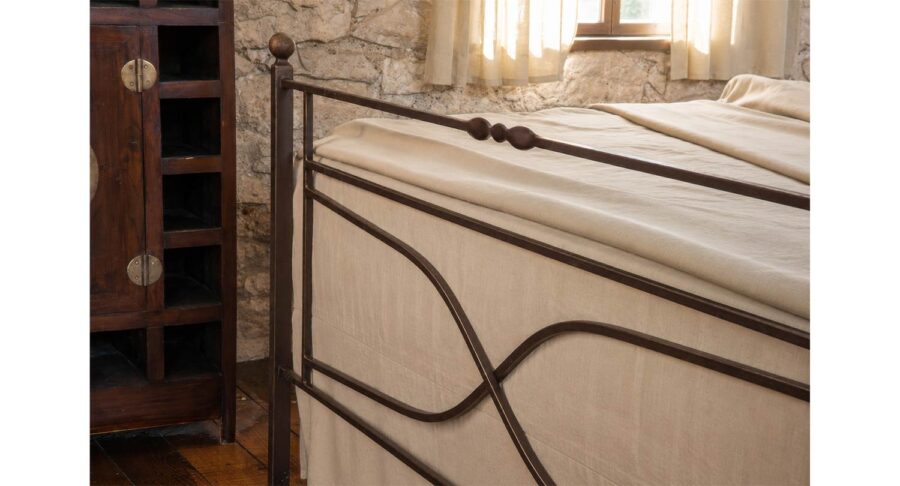
Detail of the LIA wrought iron bed.
What Do “Solid” and “Wrought” Mean?
The word “solid” describes a component with no hollow space inside. “Wrought” refers to the way the metal is shaped. The two terms are not interchangeable, and they do not necessarily describe every part of a bed.
Solid components weigh more than hollow components made from the same material and with the same external dimensions. However, greater weight alone is not proof of better construction.
Similarly, a hollow metal tube is not necessarily weak. Its strength depends on its dimensions, wall thickness and position within the frame. What matters is whether each component has been chosen appropriately for its purpose.
Welding solid iron
What Are Cast Iron Beds?
Cast iron is an iron–carbon alloy that is shaped by pouring molten metal into moulds. This process allows the creation of raised patterns and intricate details, characteristic of many traditional beds.
The presence of cast decorative elements does not mean that the entire bed is made from cast iron. A bed may combine cast details with steel components that carry the weight.
When a product is described as a “cast iron bed”, it is therefore worth checking exactly which parts are made from cast iron. The name alone is not enough to assess the strength of the complete structure.
View of a cast iron bed.
Bronze Beds: Material or Colour?
Bronze beds are associated with classic styling and warm metallic tones. In product descriptions, however, the term requires care: it may refer to the material itself, while in other cases it is used loosely to describe the furniture’s appearance.
Bronze and brass are different alloys. Likewise, an iron bed with a bronze-coloured coating or patina remains an iron bed. The finish does not change the material of the frame.
Before buying, it is useful to clarify whether the description refers to solid material, cladding or simply a decorative finish.
Construction of a bronze bed.
Aluminium Beds: Are They Durable?
Aluminium beds can be durable and stable in everyday use despite their lower weight. Their strength depends on the quality and thickness of the metal components, the frame design and the connections.
Aluminium beds have an aluminium frame and are generally lighter, with good resistance to corrosion. They belong to the metal bed category, alongside iron, cast iron and bronze beds.
The main difference is the metal used: iron beds are usually made from steel, cast iron beds feature cast iron components, while bronze beds are made from copper alloys and are known for their warm, golden tones.
Detail of an aluminium bed
What Makes a Metal Bed Stable and Quiet?
Squeaking is not inevitable in metal beds. It may be caused by loose connections, friction between surfaces, insufficient support or incorrect assembly.
Properly fitted components, suitable connections and a compatible bed base all contribute to stability. It is also important that the bed’s legs and any additional support legs rest securely on the floor.
A promise of quiet performance cannot therefore be based solely on the weight or type of metal. The construction needs to be assessed as a whole.
Metal mattress base: an option for reducing vibration.
Durability, Care and Choosing a Bed
Iron and ordinary steel can rust when exposed to moisture without adequate protection. Surface preparation and a suitable coating help preserve them. Gentle cleaning and promptly addressing any damage to the finish also support long-term use.
Before choosing a bed, ask for clear information about the materials, mattress base, assembly instructions and warranty coverage. Check the overall dimensions, as these do not necessarily match the mattress dimensions.
Electrostatic powder coating for protection against moisture and wear over time.
Conclusion
The quality of a bed is not determined solely by the name of the metal. Its design, connections, mattress base and protective finish all affect stability and durability in everyday use. Before buying, it is worth looking for clear technical information and considering the construction as a whole. Volcanohas been handcrafting iron beds in Greece since 1976.